Good stress management is not one magic fix, it is a handful of small habits that lower the load, calm your body, and protect your rest. This is the full system: why stress hurts, what drives it, and the exact habits and rewards you can track to reduce stress.
How chronic stress affects your body and mind
Short bursts of stress are normal and even useful. The harm comes from chronic stress that never switches off, because your body and mind never get the recovery they need. The effects of chronic stress build up across your sleep, focus, mood, and health:
- Ongoing stress prevents enough physical and mental recovery.
- Focus, planning, and clear decisions become harder.
- Poor sleep reduces energy, patience, and resilience.
- Headaches, muscle tension, fatigue, and stomach problems may appear.
- Quick relief can lead to scrolling, overeating, smoking, or drinking.
- Low patience can damage communication and close relationships.
- Poor sleep, unfinished tasks, and strained relationships create even more stress.
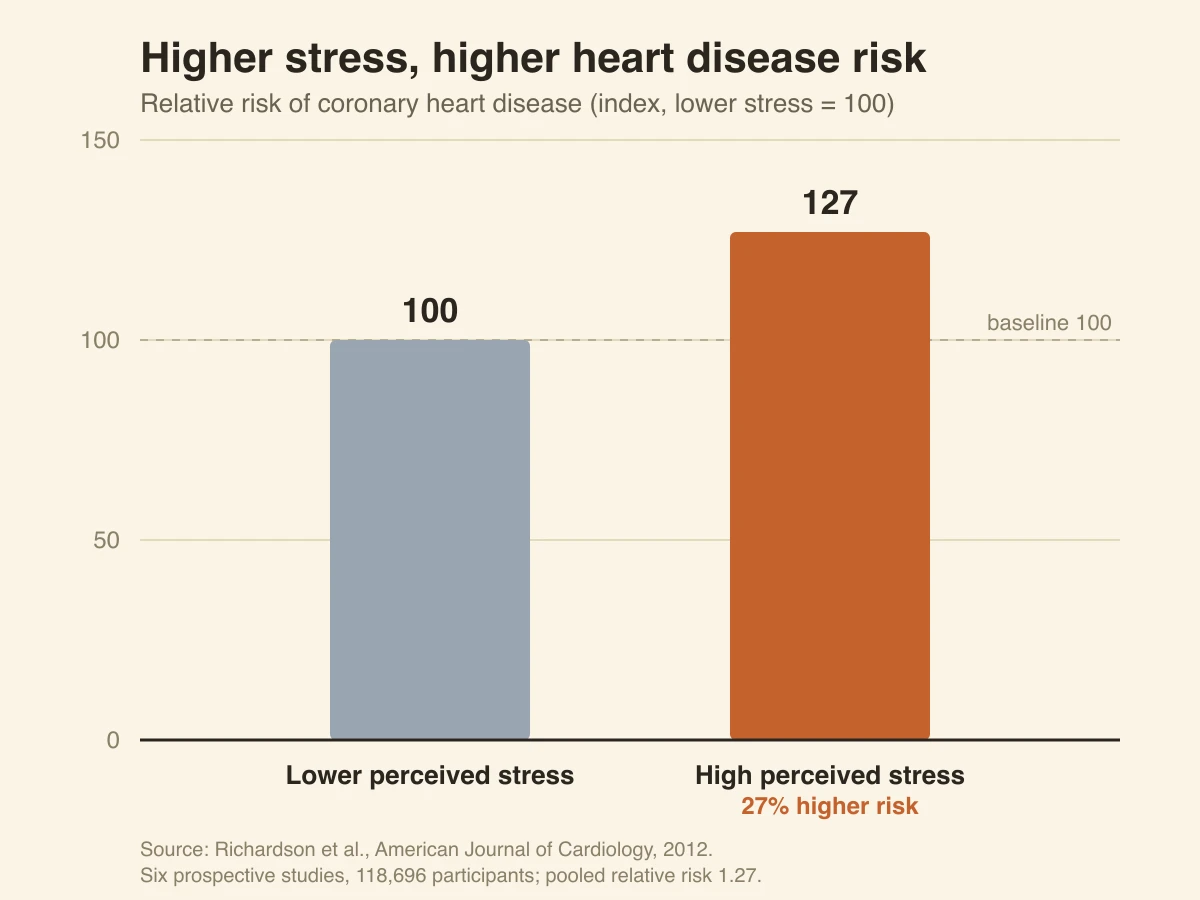
The risk reaches your heart too. A 2012 review that pooled six long-term studies of 118,696 people found that people reporting high stress were 27% more likely to develop heart disease. It shows a link, not proof that stress alone causes the disease, so read it as a strong warning sign.
What causes stress to build up
Stress is not random. It grows from a set of pressures you can usually name, and naming yours is the first step to lowering it. These are the common causes of stress:
- Stress builds when you feel that you have more problems than you can handle.
- Common causes include too much work, money problems, health worries, caring for someone, arguments, and big life changes.
- A difficult situation feels more stressful when you cannot control what happens next.
- Work can become stressful when you give a lot but receive too little pay, respect, security, or progress.
- Problems feel heavier when you do not have anyone to help you.
- Trying to do everything perfectly, or always expecting the worst, adds more pressure.
- Putting off a difficult task can make it more urgent and stressful later.
- Saying yes too often can leave you with no time to rest.
- Phone alerts, news, and jumping between tasks stop you from taking a real break.
- Poor sleep, too much caffeine, and too little movement make everyday problems feel harder.
- Several small problems can build up until they feel overwhelming.
Stress management techniques that actually help
Stress has many causes, so no single method works for every situation. When you can change the problem, take one small step. When you cannot, calm your body, quiet anxious thoughts, and protect your rest. Each habit below is one you can track in the app.
HabitReduce 1 stressor
Take one useful action on a problem you can change
+15
Reduce 1 stressor
Take one useful action on a problem you can change
Act on what you control: 1. Choose one current stressor, such as an overdue task, a difficult conversation, a crowded schedule, an unexpected bill, or an upcoming event. 2. Take one step to reduce it: finish it, schedule it, ask for help, change the deadline, or say no.
Why it may help: Taking one useful action can remove part of the pressure itself, instead of only calming your reaction to it.
Plan tomorrow
Write a to-do list & pick top 3 tasks
Why it may help: A short plan reduces the number of decisions waiting for you the next morning. Knowing what to start with can make the day feel easier to control.
HabitMuscle relaxation
Tense and release each major muscle group
+12
Muscle relaxation
Tense and release each major muscle group
Progressive muscle relaxation: 1. Sit or lie down somewhere comfortable. 2. Tense your feet and toes for 5 seconds, then release, and repeat twice. 3. Do the same with your legs, stomach, hands and arms, shoulders, jaw, and eyes. 4. Notice each area relax, then finish with 3 slow breaths.
Why it may help: Gently tensing and releasing each muscle group helps you notice where your body is holding pressure. Focusing on the relaxed feeling can make it easier to let that tension go.
Habit5 Senses Technique
Try the 5 senses grounding technique
+15
5 Senses Technique
Try the 5 senses grounding technique
5 senses grounding technique: - Name 5 things you can see. - Notice 4 things you can feel. - Identify 3 things you can hear. - Find 2 things you can smell. - Name 1 thing you can taste. - Take one slow breath and notice how you feel.
Why it may help: Naming what your senses notice brings your attention back to your body and surroundings. It can interrupt a loop of worrying about the past or future.
HabitWorry time
Give your worries a fixed 10 to 15 minute window
+8
Worry time
Give your worries a fixed 10 to 15 minute window
A fixed window to deal with worries: 1. Pick the same 10 to 15 minutes each day, not right before bed. 2. When a worry appears outside it, note a few words and carry on. 3. During worry time, read your list and take one worry at a time. 4. If you can act on it, write down steps to act on it; if you cannot, acknowledge it and let it go. 5. Stop when the timer ends and leave the rest until tomorrow.
Why it may help: Giving worries a fixed time keeps them from taking over the whole day. Writing them down also helps separate problems you can act on from fears you cannot control.
HabitDeep Belly Breathing
5 minutes of deep belly breathing
+6
Deep Belly Breathing
5 minutes of deep belly breathing
Deep belly breathing: - Breathe in slowly through your nose, letting your belly rise. - Exhale gently through your mouth and repeat for 2 to 5 minutes. Benefits: - reduce stress - calm the nervous system - improve focus - make it easier to fall asleep - help with stomach ache
Why it may help: Slow belly breathing gives your body a quiet pause and moves your attention away from racing thoughts. Five minutes is short enough to repeat regularly.
HabitMeditate
Meditate for 10 minutes using Headspace
+25
Meditate
Meditate for 10 minutes using Headspace
Benefits: - Lowers stress - Reduces anxiety - Sharpens focus - Increases self-awareness - Lowers blood pressure - Improves sleep quality - Decreases inflammation - Enhances memory
Why it may help: A guided session gives you clear instructions to follow when it is hard to settle by yourself. Regular short sessions make the practice easier to return to under stress.
HabitMindful Breathing
Follow your natural breathing for 10 minutes
+30
Mindful Breathing
Follow your natural breathing for 10 minutes
How to practise: - Sit comfortably and set a timer for 10 minutes. - Take three slow breaths, then let your breathing return to normal. - Choose one anchor, such as your nostrils, chest or belly. - Observe each inhale and exhale without controlling them. - When your mind wanders, notice it and gently return to the breath. - When the timer rings, notice one sound and one body sensation before opening your eyes.
Why it may help: Returning to the breath each time your attention wanders gives you practice in stepping away from distracting thoughts. The goal is to refocus, not to stop thinking completely.
Phone-free walk
Take a walk and leave your phone behind
Why it may help: Walking releases physical energy and gives your mind a break from the same surroundings and demands. Leaving messages and news behind makes the break more complete.
Yoga
Do yoga with a free class on YouTube
Why it may help: Gentle yoga combines movement with steady breathing. This can ease physical tension while giving your attention one calm activity to follow.
HabitGym
Go to the gym for a full workout session
+40
Gym
Go to the gym for a full workout session
A complete session can be simple: - Warm up for 5 minutes - Do 4 to 6 main exercises - Record your weights or reps - Finish with a short cooldown
Why it may help: A gym session gives restless energy somewhere useful to go. Focusing on each exercise can provide a mental break from daily problems, while movement can help your body release built-up tension.
10-minute cuddle
Cuddle with your partner for 10 minutes
Why it may help: Safe, wanted physical closeness can feel calming and reassuring. Ten quiet minutes together also creates a pause from other demands and can strengthen your sense of connection and support.
Time in nature
Spend a few minutes outside to lower stress
Why it may help: Nature gives your attention a break from screens, noise, decisions, and other demands. Natural sights and sounds hold your interest without requiring intense focus, which can help your mind slow down and your body release tension.
HabitBedtime routine
Repeat the same calming steps every night
+13
Bedtime routine
Repeat the same calming steps every night
Your Routine: - Prepare tomorrow's essentials - Dim the lights - Put screens away 1 hour before - Skin Care and brush your teeth - Read or relax for a few minutes
Why it may help: A steady bedtime routine protects the sleep that stress tends to steal, and better sleep makes the next day's demands easier to handle.
Rewards that help you de-stress
Rewards are the other half of the system. These are real treats from the app's library, not stress tasks in disguise, and each one gives you a genuine break to look forward to while managing stress. Spend the coins your habits earn on one of these:
Long hot shower
Take your time in a long hot shower
Why it may help: Warm water and uninterrupted time can help your body loosen up and mark a clear pause between stressful demands.
Music break
Listen to your favorite playlist and nothing else
Why it may help: Giving your full attention to music can interrupt repetitive thoughts and shift your focus toward something familiar and enjoyable.
Sit in the sun
Relax outside in the sunshine, no exercise needed
Why it may help: Quiet time outdoors provides a change of setting and a low-pressure opportunity to slow down without turning the break into another task.
Play with your pet
Spend uninterrupted leisure time playing with your pet
Why it may help: Playing with a pet brings your attention into the present and offers affection, companionship, and a break from work or worries.
Read for pleasure
Read a chapter or enjoy your book for 30 minutes
Why it may help: Reading for enjoyment gives your mind one calm story or subject to follow instead of continuing to cycle through stressful thoughts.
Bubble bath
Run a warm bubble bath and soak in it
Why it may help: A warm bath creates a quiet boundary around recovery time and can make it easier to release physical tension.
Afternoon nap
Take a proper nap this afternoon
Why it may help: A short period of rest can help when tiredness is making ordinary demands feel more difficult, provided the nap does not interfere with nighttime sleep.
Sleep in
Sleep in late, guilt free
Why it may help: Extra rest can feel restorative after a demanding period and gives you permission to begin the day without immediately rushing.
Sauna session
Sweat it out and relax in the sauna
Why it may help: A sauna session creates protected time away from messages and responsibilities while the warmth encourages you to sit still and unwind.
Massage
Book yourself a relaxing massage
Why it may help: Massage provides dedicated recovery time and may ease the muscle tightness that often accompanies stressful periods.
RewardSelf care night
Dedicate the whole evening just to you
40
Self care night
Dedicate the whole evening just to you
Ideas: - Put your phone away - Take a bath or long shower - Cook or order something you love - Read, watch a comfort film, or do skincare - Go to bed whenever you feel ready
Why it may help: Protecting an entire evening for yourself creates distance from ongoing demands and gives you enough time to recover without watching the clock.
Dance at home
Dance to your favorite music for 10 minutes
Why it may help: Ten minutes of moving to music you love shakes loose the physical tension stress leaves in your body and lifts your mood, and it turns a break into something you actually look forward to.