
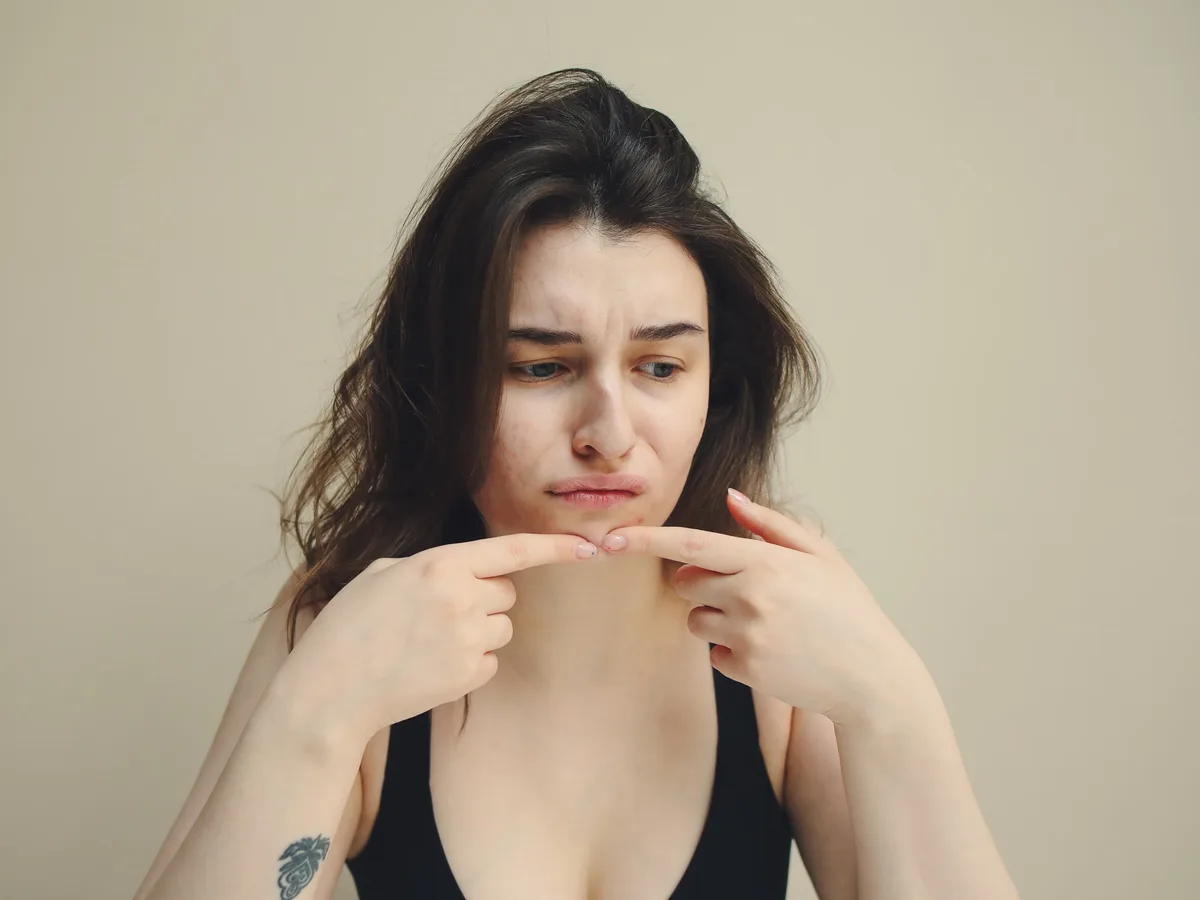
Acne treatment works best as a system rather than a single product, so this is the whole thing: what breakouts really cost you, what is driving them, and the exact habits and rewards you can track.
Why acne treatment matters beyond the mirror
Spots are treated as a cosmetic annoyance, which badly understates what living with them does to a person. The costs stack up long before anyone mentions your skin:
- Breakouts sit right on the face, so they chip away at confidence every time you look in a mirror.
- People with spots report more anxiety and a higher risk of depression, meaning a lasting low mood, not just a bad day.
- Many sufferers avoid photos, dating, parties, and even job interviews to hide their skin.
- Squeezed or deep spots can leave permanent scars and pits that no cream fully removes later.
- Healed spots often leave dark or red marks that can stay visible for months.
- The costs repeat for years: cleansers, creams, dermatologist visits, and prescriptions add up fast.
- Adults who still break out past their teens often feel embarrassed and abnormal, which adds frustration on top.
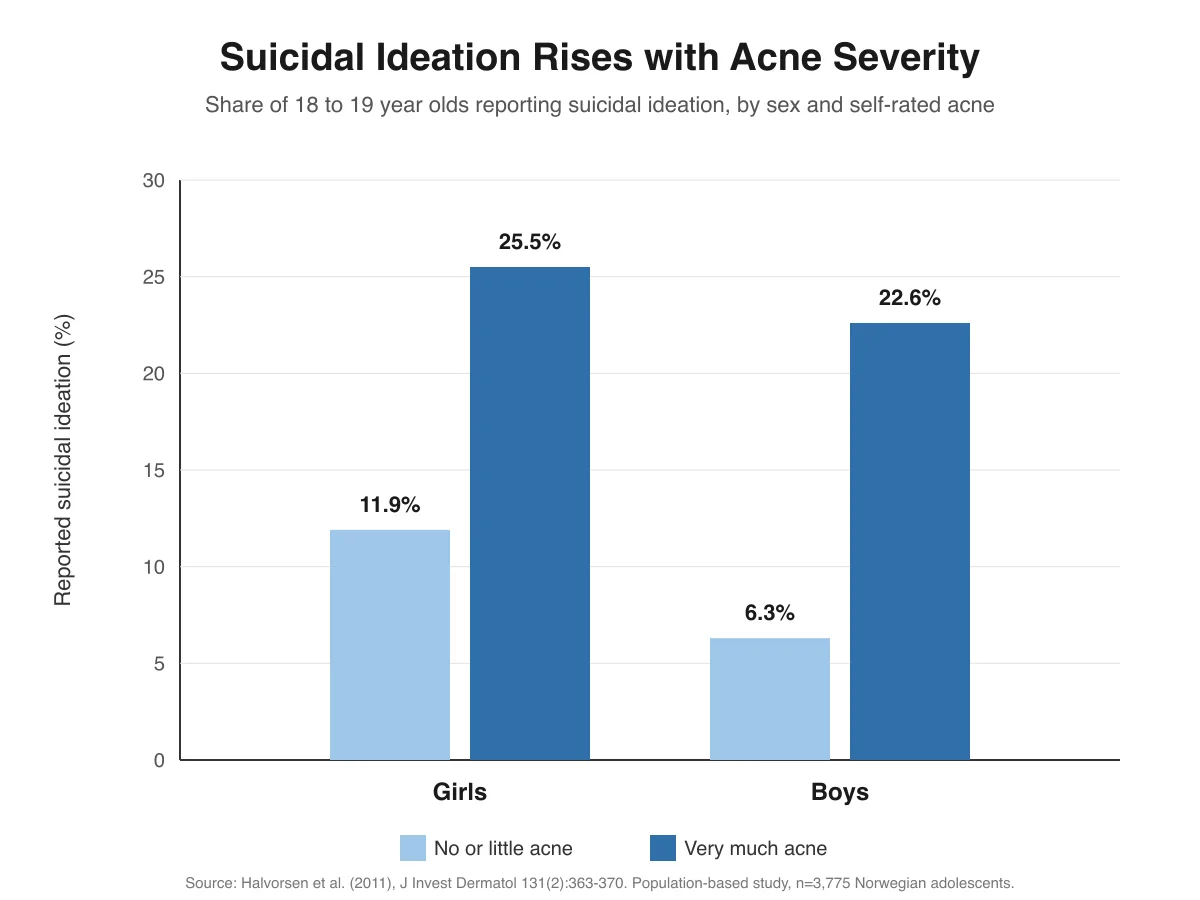
That emotional weight has hard numbers behind it. A population study that surveyed 3,775 Norwegian 18 and 19 year olds found suicidal thoughts in 25.5% of girls with severe acne against 11.9% of those with clear skin, and in 22.6% of boys against 6.3%. It was measured at a single moment, so it shows how closely bad skin and mental strain travel together, not that one causes the other.
What causes acne, from the gut up
Breakouts have several drivers at once, which is exactly why the product that saved your friend's skin does nothing for yours. Most acne traces back to these:
A symptom, not the root problem
- Breakouts are a symptom, not the underlying issue: the skin shows a problem that usually starts somewhere else in the body.
- In most cases they are associated with gut issues, because an unhealthy gut drives inflammation that shows up on the skin.
- Gut microbiome imbalances, meaning the mix of bacteria in your digestive system is out of balance, are linked to more breakouts.
Diet
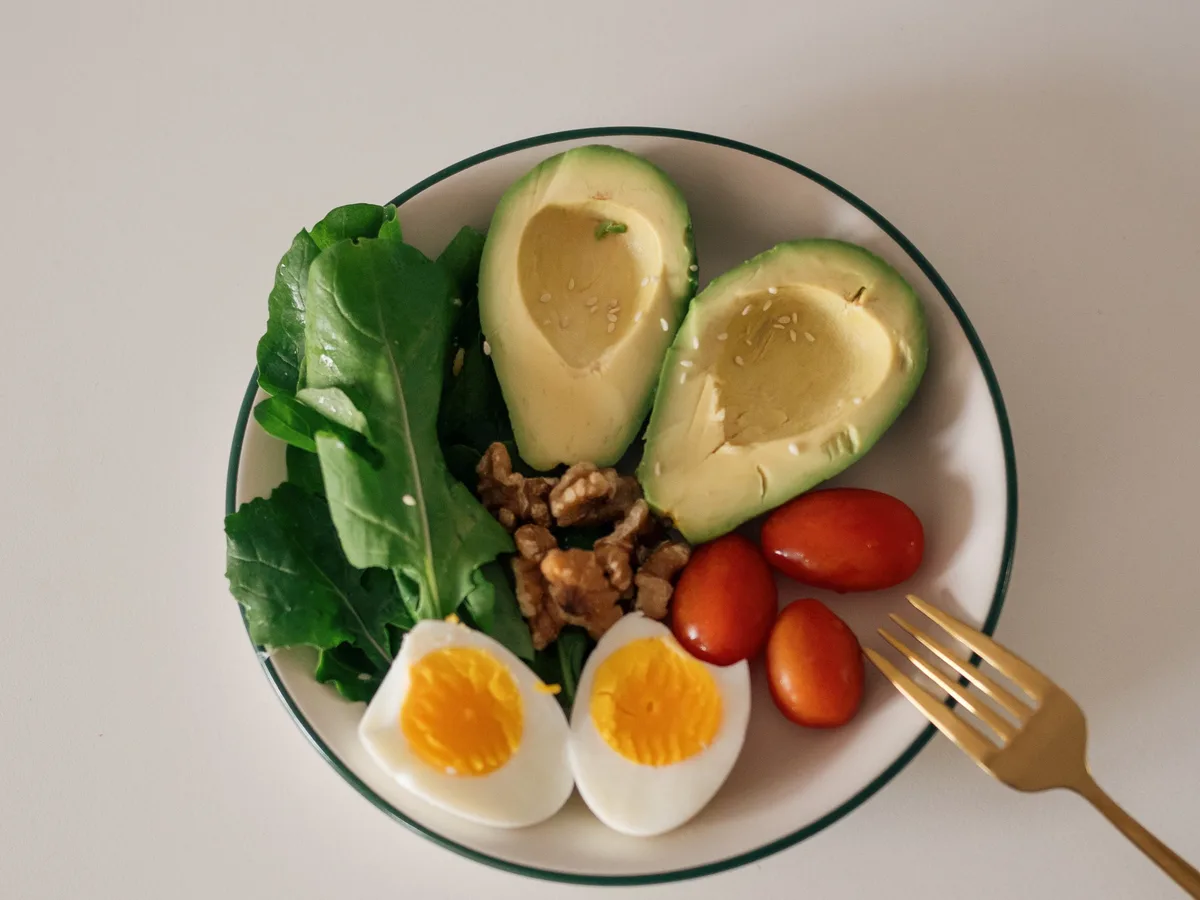
- Fast food and ultra-processed meals combine sugar, refined carbs, and poor fats, a pattern tied to worse skin.
- Sugary foods and refined carbs spike blood sugar, which is linked to worse breakouts in many people.
What happens in the skin
- Hormones called androgens rise in puberty and around periods, telling the skin to make far more oil.
- Dead skin cells that fail to shed mix with that oil and plug the pore, forming blackheads and whiteheads.
- A normal skin bacterium called C. acnes multiplies inside blocked pores and triggers red, swollen spots.
- Genetics matter a lot: if your parents had bad skin, you are far more likely to struggle too.
Lifestyle and stress
- Stress raises cortisol, a hormone that pushes the oil glands to produce more.
- Short or poor sleep raises stress hormones and inflammation, slowing skin healing.
Products, friction, and habits
- Pore-clogging makeup, greasy hair products, and heavy creams can trap oil and start new spots.
- Friction and trapped sweat from phones, helmets, masks, and tight straps press bacteria into the skin.
- Over-washing and hard scrubbing irritate the skin, which backfires and makes things worse.
- Some medicines, including steroids and certain hormone treatments, can cause breakouts as a side effect.
The best skincare routine for acne, habit by habit
This article is for general information only and is not medical advice. Always talk to a doctor or pharmacist before starting, stopping, or changing any medication, supplement, or treatment.
Acne has several causes at once, so no single habit clears it. Build the routine from the ones that match your own triggers, track them in the app, and drop the rest.
HabitMorning skincare
Wash with a gentle cleanser, then apply sunscreen
+8
Morning skincare
Wash with a gentle cleanser, then apply sunscreen
Instructions: 1. Wash your face with a gentle cleanser and lukewarm water. 2. Pat dry with a clean towel instead of rubbing. 3. Apply an oil-free sunscreen over the whole face before you leave.
Why it may help: Cleansing clears the oil built up overnight, and daily sunscreen protects healing spots from turning into lasting dark marks.
HabitEvening skincare
Rinse with water, then moisturize before bed
+5
Evening skincare
Rinse with water, then moisturize before bed
Instructions: 1. Remove any makeup first. 2. Rinse your face with lukewarm water, no harsh scrubbing. 3. Apply a non-comedogenic moisturizer while the skin is still slightly damp. 4. If your doctor prescribed them, this is also when to apply your tretinoin cream or take your acne medication.
Why it may help: A gentle evening rinse removes the day without stripping the skin, and moisturizing keeps the barrier calm so it produces less oil.
HabitHands off your face
No touching, no picking, all day
+8
Hands off your face
No touching, no picking, all day
Instructions: 1. Notice the moments you lean on your hand, rest your chin, or hold the phone to your cheek. 2. In front of the mirror, look only, and step away if you catch yourself starting to squeeze. 3. Use a spot treatment instead of your fingers. 4. Wash your hands whenever you do need to touch your face.
Why it may help: Hands press oil and bacteria into the pores, and squeezing turns a spot that would have faded into a mark or a scar that stays.
HabitChange pillowcase
Put on a fresh pillowcase twice a week
+5
Change pillowcase
Put on a fresh pillowcase twice a week
Instructions: 1. Keep two or three spare pillowcases ready. 2. Swap in a clean one every three to four days. 3. Wash them with a fragrance-free detergent.
Why it may help: Your face rests on the same fabric for hours every night, and it collects oil, hair product, and dead skin.
HabitFresh face towel
Use a face-only towel and change it twice a week
+3
Fresh face towel
Use a face-only towel and change it twice a week
Instructions: 1. Keep a small towel used only for your face, never for hands or body. 2. Swap it for a clean one twice a week. 3. Pat the skin dry rather than rubbing.
Why it may help: A shared or damp bathroom towel holds bacteria, and rubbing irritates skin that is already inflamed.
HabitHair off your face
Tie hair back and keep it washed
+3
Hair off your face
Tie hair back and keep it washed
Instructions: 1. Tie or clip hair away from your forehead and cheeks. 2. Wash your hair regularly, especially after workouts. 3. Keep styling products away from the hairline.
Why it may help: Hair carries oil and product straight onto the forehead and jaw, two of the most common breakout areas.
HabitDrink water
Drink 2 liters of water to stay hydrated
+10
Drink water
Drink 2 liters of water to stay hydrated
Make the target easier to reach: - Drink a glass after waking - Keep a refillable bottle nearby - Drink with each meal
Why it may help: Well-hydrated skin heals faster and copes better with drying acne treatments.
HabitNo sugar
Cut added sugar today for steadier energy all day
+30
No sugar
Cut added sugar today for steadier energy all day
Negative Effects: - Energy crashes - Increased cravings - Weight gain - Tooth decay - Blood sugar spikes - Poor concentration - Mood swings - Increased hunger - Skin breakouts - Inflammation - Poor dental health - Higher risk of type 2 diabetes & heart disease - Fatty liver risk
Why it may help: Sugar spikes drive the hormone signals that push oil glands to produce more.
Eat daily vegetables
Add a serving of vegetables to fuel your body
Why it may help: Fibre feeds the gut bacteria linked to calmer skin, and vegetables replace the refined carbs that make breakouts worse.
HabitNo fast/junk food
Skip fast food today and choose something nourishing
+25
No fast/junk food
Skip fast food today and choose something nourishing
Negative Effects: - Weight gain - Low energy - Energy crashes - Poor digestion - Bloating - High salt intake, sugar intake, saturated fat intake - Nutrient deficiencies - Increased cravings - Poor concentration - Higher cholesterol & blood pressure - Greater risk of heart disease & type 2 diabetes - Skin problems - Poor sleep quality
Why it may help: Fast food stacks sugar, refined carbs, and poor fats together, the exact pattern tied to worse skin.
Sleep enough
Get a full 8 hours of sleep tonight
Why it may help: Short nights raise stress hormones and slow the repair work your skin does overnight.
HabitGym
Go to the gym for a full workout session
+40
Gym
Go to the gym for a full workout session
A complete session can be simple: - Warm up for 5 minutes - Do 4 to 6 main exercises - Record your weights or reps - Finish with a short cooldown
Why it may help: Regular training lowers stress hormones and improves how your body handles blood sugar, both linked to calmer skin.
HabitAcne medication
Take your isotretinoin, doxycycline, or spironolactone
+5
Acne medication
Take your isotretinoin, doxycycline, or spironolactone
Instructions: 1. Take your prescribed tablet at the same time each day, with food. 2. The three most common are isotretinoin (Accutane or Roaccutane), doxycycline, and spironolactone. 3. Never share it or take a dose your doctor did not prescribe. 4. Keep every follow-up appointment and blood test. For informational purposes only, not medical advice. Talk to your doctor before starting or changing any treatment.
Why it may help: Oral acne medication only works as a complete course, and missed days stretch out the months before your skin clears.
HabitTretinoin cream
Apply your prescribed retinoid at night
+8
Tretinoin cream
Apply your prescribed retinoid at night
Instructions: 1. Apply a pea-sized amount to the whole dry face at night, starting two to three nights a week. 2. Moisturize afterwards and always use sunscreen the next morning. 3. Build up to every other night, then nightly, as your skin tolerates it. 4. Only move to a higher strength when your doctor confirms it. For informational purposes only, not medical advice. Talk to your doctor before starting or changing any treatment.
Why it may help: Retinoids clear the plugs inside pores before spots form, but only if applied consistently for months.
The last two habits are different from the rest. Both must be prescribed by a doctor and bought in a pharmacy, they are never over-the-counter products, and the strength and dose are your doctor's decision rather than yours.
Rewards to spend your coins on
You can pull these rewards straight from the app library, and each one fits an evening that is kind to your skin.
Professional facial
Book a professional facial and glow
Why it may help: A professional treatment gives your skin an unhurried deep clean and a visible reason to keep the routine going.
Fancy dinner
Treat yourself to dinner at a nice restaurant
Why it may help: An evening out is exactly the kind of social plan people cancel when their skin is bad, so it rewards the progress twice.
Skincare night
Face mask, cucumber slices, and a film in your robe
Why it may help: A slow mask-and-cucumber evening turns skincare from a chore into something you look forward to.