

Learning how to sleep better is not about one trick you try tonight, it is about a handful of habits you repeat until your body expects sleep at the same time every day.
What happens when you do not sleep enough
Short nights are easy to shrug off, because the damage builds quietly and you stop noticing how tired you actually are:
Your mind, mood, and safety
- The brain files and saves the day's learning during sleep, so short nights mean weaker memory and slower learning.
- Sleep loss makes the brain's emotional alarm hypersensitive, which shows up as irritability, anxiety, and low mood.
- Drivers sleeping four or five hours crash several times more often than drivers who get seven.
Your long-term health
- Sleeping under seven hours is linked to higher rates of high blood pressure, heart attack, and stroke.
- Short sleep weakens the immune system, the body's defence against infection, so colds land more easily.
- One bad night can cut the activity of natural killer cells, the immune cells that hunt viruses, by around 70 percent.
- Poor sleep raises ghrelin, the hunger hormone, and lowers leptin, the fullness hormone, so appetite climbs and weight follows.
- Blood sugar control worsens after short nights, pushing the body toward type 2 diabetes.
How you look and perform
- Chronic short sleep is associated with more visible skin ageing and a more fatigued-looking face.
- Athletic output drops across endurance, strength, speed, and skill control, while the same effort feels harder.
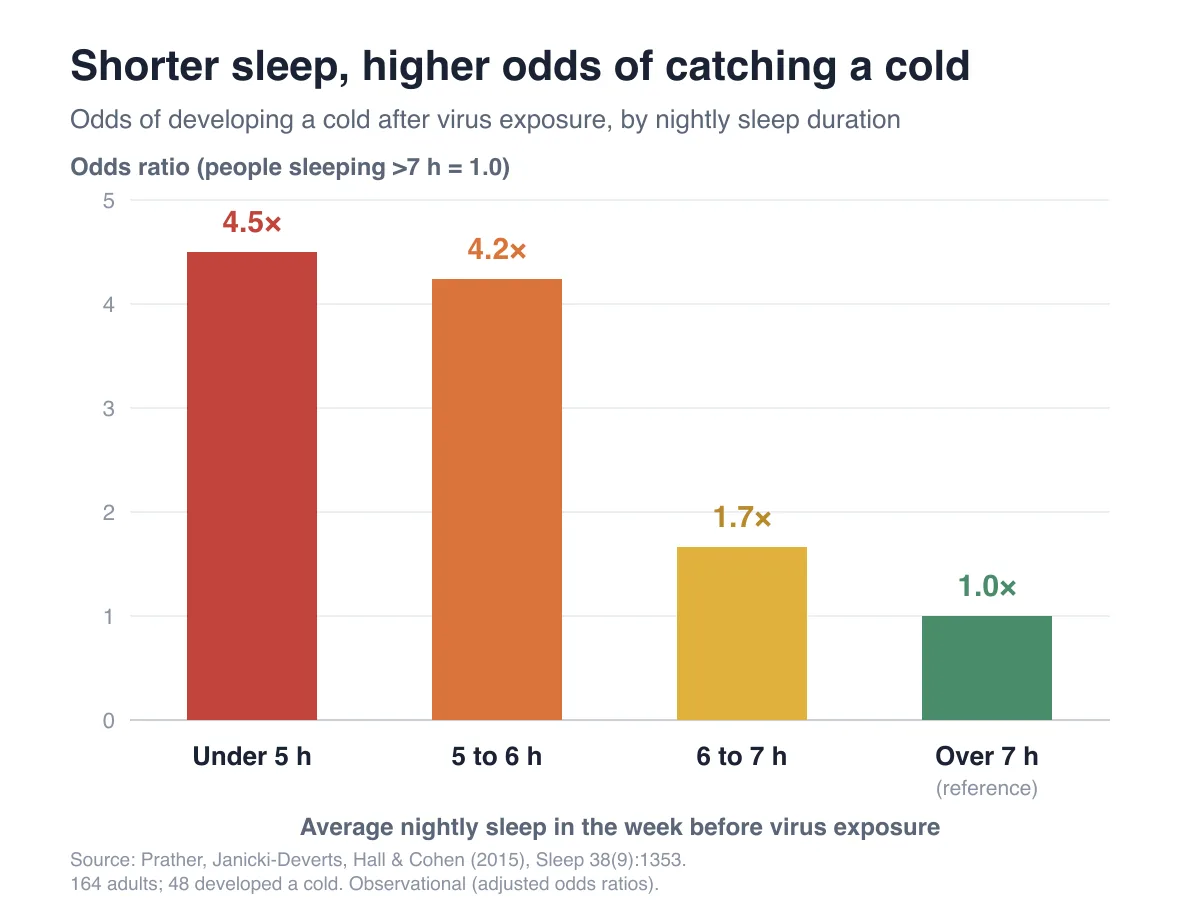
Researchers measured the sleep of 164 adults for a week, then put cold virus drops in every nose and quarantined everyone. Against people sleeping over seven hours, the odds of falling ill were 4.5 times higher under five hours, though sleep was measured rather than assigned, so this is a strong link and not proof.
What causes bad sleep
Before you change anything, it helps to know which of these is actually keeping you awake, because the fix depends on the cause:
What you eat and drink
- Caffeine stays active for hours, so an afternoon coffee still blocks the sleep signal at bedtime and breaks the night into pieces.
- Alcohol feels like a sleep aid but fragments the night and strips out REM sleep, the dreaming stage that restores the mind.
- Nicotine is a stimulant that shortens total sleep and cuts into REM.
- Heavy or late meals and evening fluid loading push digestion and bathroom trips into the night.
- A diet high in sugar and refined carbohydrates swings blood sugar up and down, and the crash can wake you in the early hours.
- Fried, fatty, and heavily processed food sits in the stomach longer and raises the chance of reflux, the burning that comes when stomach acid rises while you lie flat.
- Diets low in fruit, vegetables, and fibre are linked to lighter, more broken sleep with less deep sleep.
Your schedule and your evening
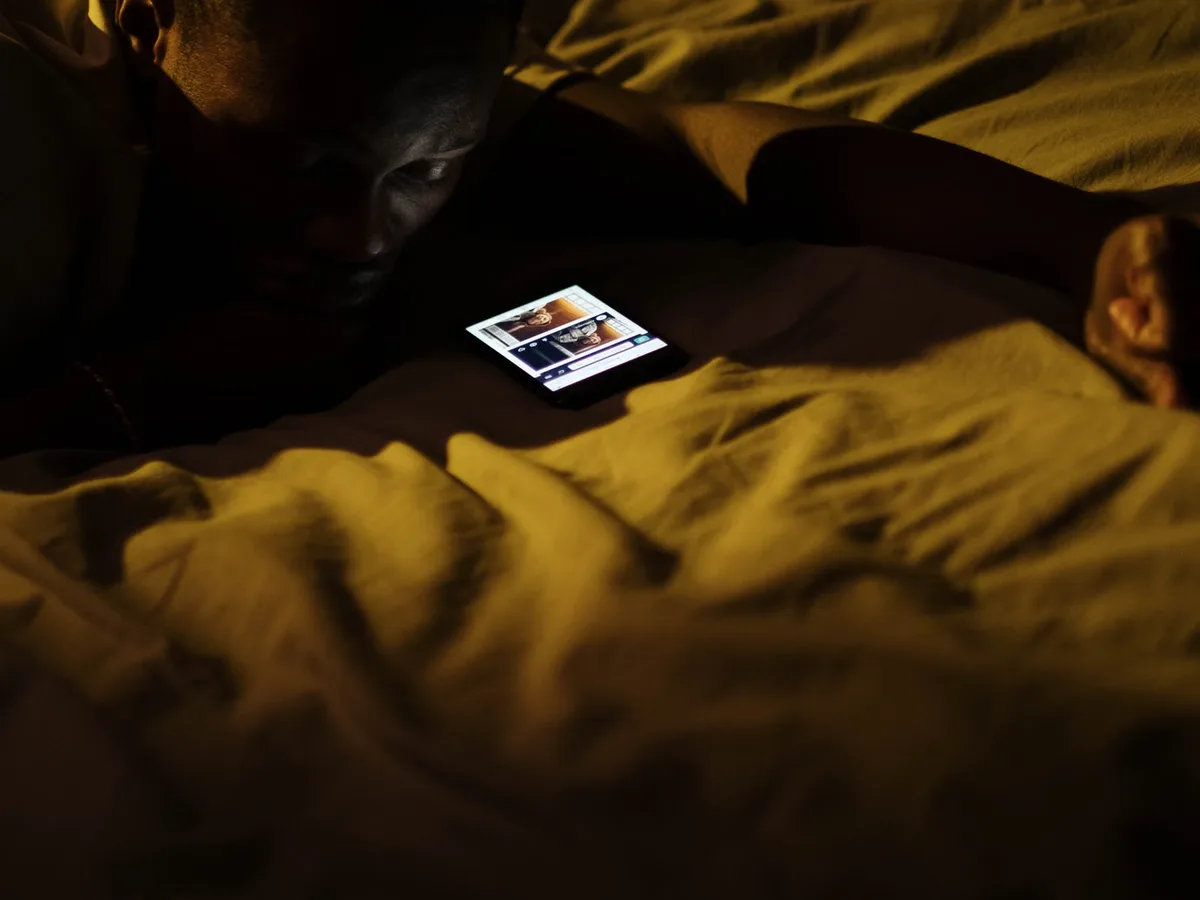
- Bright screens in the evening suppress melatonin, the hormone that signals bedtime, and the content itself keeps the brain switched on.
- Going to bed and getting up at different times confuses the body clock, so it never learns when to release sleep hormones.
- Shift and night work force sleep against the body clock, which produces short and broken rest.
- Long or late naps burn off the sleep pressure that should have carried you into the night.
- Stress and racing thoughts hold the body in an alert state that will not switch off at bedtime.
Your bedroom and your body
- A warm bedroom blocks sleep, because the body has to drop its core temperature by about one degree Celsius to fall and stay asleep.
- Light, noise, and an uncomfortable mattress physically interrupt deep sleep even when you never fully wake.
- Sleep apnea, where breathing repeatedly stops and restarts at night, wrecks sleep quality without the sleeper knowing.
- Ageing thins out deep sleep and makes waking easier, so older adults sleep more lightly.
- Chronic pain, heartburn, night-time urination, and common medications wake people repeatedly.
How to sleep better, one habit at a time
This article is for general information only and is not medical advice. Always talk to a doctor or pharmacist before starting, stopping, or changing any medication, supplement, or treatment.
Track the habits that match your cause, and give them a couple of weeks before you judge them.
HabitSame wake-up time
Get up at one fixed time and hold it every day
+10
Same wake-up time
Get up at one fixed time and hold it every day
Instructions: 1. Pick one wake-up time you can keep seven days a week. 2. Set the alarm for that time and put it out of arm’s reach. 3. Get up on the first alarm, even after a bad night. 4. Open the curtains or step outside within a few minutes.
Why it may help: The body clock takes its strongest cue from when you wake, not when you go to bed. Holding one wake-up time teaches your body when to feel sleepy at night, so falling asleep gets easier without you forcing it.
HabitSame bedtime
Go to bed inside the same 30 minute window
+10
Same bedtime
Go to bed inside the same 30 minute window
Instructions: 1. Choose a bedtime that gives you seven to nine hours before your wake-up time. 2. Set a reminder 30 minutes before it to start winding down. 3. Go to bed inside that window, give or take 30 minutes. 4. If you are not sleepy, still go to bed at the usual time and rest.
Why it may help: A steady bedtime stops your body from having to guess when the night begins. Over a couple of weeks the sleepiness starts arriving on schedule instead of two hours too late.
HabitRestrict Sleep Hours
Only spend in bed the hours you actually sleep
+20
Restrict Sleep Hours
Only spend in bed the hours you actually sleep
Instructions: 1. For one week, note roughly how many hours you actually sleep each night. 2. Set your time in bed to that average plus 30 minutes, and never go below five and a half hours. 3. Keep your fixed wake-up time and move your bedtime later to hit that window. 4. Once you are asleep for almost all of the time you are in bed, move bedtime 15 minutes earlier. 5. Repeat weekly until you wake up rested.
Why it may help: Lying awake for hours teaches your body that bed is a place for being awake. Spending less time in bed builds up the pressure to sleep and packs your sleep into one solid block, and you stretch the window back out only once your body is filling it. It is the hardest habit here and usually the one that works.
Morning sunlight
Get sunlight after waking to reset your body clock
Why it may help: Daylight in your eyes early is the signal that starts the countdown to sleepiness roughly 16 hours later. It also shuts off the last of the night's melatonin, so you feel awake sooner and tired at the right time.
No Phone before bed
Put screens away 1 hour before bedtime
Why it may help: Screens work against sleep twice over, with bright light that delays the sleep hormone and content that keeps the mind switched on. Putting the phone away an hour before bed removes both at once.
HabitCut caffeine
Cut back on caffeine today for easier sleep tonight
+20
Cut caffeine
Cut back on caffeine today for easier sleep tonight
Negative Effects: - Poor sleep - Difficulty falling asleep - Anxiety - Restlessness - Jitters - Increased heart rate - Heart palpitations - Energy crashes - Dependence - Digestive discomfort - Dehydration - Difficulty relaxing
Why it may help: Caffeine stays active in the body for hours, so a mid-afternoon coffee is still working at midnight. Even when you fall asleep fine, it thins out the deep sleep you actually need.
HabitNo alcohol
Skip alcohol today for a clear, steady head
+38
No alcohol
Skip alcohol today for a clear, steady head
Negative Effects: - Poor sleep - Headaches - Increased anxiety - Digestive problems - Weight gain - Higher blood pressure - Liver damage - Weakened immune system - Higher cancer risk - Risk of dependence - Accidents and injuries - Relationship problems - Expensive nights out - Hangovers - Regrettable decisions
Why it may help: A drink makes you drowsy, then breaks the second half of the night into pieces and cuts the dreaming sleep that restores the mind. Skipping it is often the single biggest change in how rested you feel.
HabitBedtime routine
Repeat the same calming steps every night
+13
Bedtime routine
Repeat the same calming steps every night
Your Routine: - Prepare tomorrow's essentials - Dim the lights - Put screens away 1 hour before - Skin Care and brush your teeth - Read or relax for a few minutes
Why it may help: The same few steps in the same order become a signal your body learns to read, so winding down stops being a decision. It works because the routine is repeated, not because any single step is special.
HabitMagnesium at night
Take magnesium before bed
+3
Magnesium at night
Take magnesium before bed
Instructions: 1. Take 200 to 400 mg of magnesium citrate or magnesium glycinate. 2. Swallow it with water about an hour before bed. 3. Drop the dose if your stools get too loose.
Why it may help: Magnesium supports the calming side of the nervous system and the muscles that will not settle at night. It is a small nudge rather than a sedative, most noticeable if you were low to begin with.
HabitMelatonin
Take a low dose a few hours before bedtime
+4
Melatonin
Take a low dose a few hours before bedtime
Instructions: 1. Buy a low dose, around 0.5 to 1 mg. More is not better. 2. Take it two to three hours before the bedtime you are aiming for. 3. Keep your wake-up time and morning daylight fixed, because they do most of the work. 4. Use it for a few weeks to move your body clock, not as a nightly sleeping pill. For informational purposes only, not medical advice. Talk to your doctor before starting or changing any treatment.
Why it may help: Melatonin is the signal your body uses to mark the start of the night, so a small dose taken well before bed can pull your body clock earlier. It shifts when you get sleepy rather than knocking you out, which is why the low early dose beats the large one at bedtime.
HabitWorry time
Give your worries a fixed 10 to 15 minute window
+8
Worry time
Give your worries a fixed 10 to 15 minute window
A fixed window to deal with worries: 1. Pick the same 10 to 15 minutes each day, not right before bed. 2. When a worry appears outside it, note a few words and carry on. 3. During worry time, read your list and take one worry at a time. 4. If you can act on it, write down steps to act on it; if you cannot, acknowledge it and let it go. 5. Stop when the timer ends and leave the rest until tomorrow.
Why it may help: Worry that has nowhere to go tends to show up the moment your head hits the pillow. Giving it a fixed slot earlier means the thoughts have already had their turn by bedtime.
HabitBody scan exercise
Relax each muscle group from head to toe
+20
Body scan exercise
Relax each muscle group from head to toe
How to: - Sit or lie down comfortably and take a few slow breaths. - Focus on one area of your body and notice any tension without trying to force it away. - For example, gently tense your shoulders as you breathe in, then release them as you breathe out. - Continue moving from head to toe, repeating the same process with each muscle group. - Finish by relaxing your whole body and taking one final slow breath.
Why it may help: Moving your attention slowly through the body gives the mind somewhere to rest that is not tomorrow's problems. Many people fall asleep partway through, which is a fine outcome.
Evening calm-down exercises
Pick at least two of these and do them consistently.
HabitMeditate
Meditate for 10 minutes using Headspace
+25
Meditate
Meditate for 10 minutes using Headspace
Benefits: - Lowers stress - Reduces anxiety - Sharpens focus - Increases self-awareness - Lowers blood pressure - Improves sleep quality - Decreases inflammation - Enhances memory
Why it may help: Meditation trains the skill of noticing a thought and letting it pass rather than following it. That is exactly the skill a mind needs at 2am, and it gets easier the more nights you practise it.
Habit4-7-8 breathing
Inhale for 4, hold for 7, exhale for 8
+10
4-7-8 breathing
Inhale for 4, hold for 7, exhale for 8
Calm your body with a slow exhale: 1. Sit or lie down and rest the tip of your tongue behind your upper front teeth. 2. Breathe in quietly through your nose for 4 counts. 3. Hold your breath for 7 counts. 4. Exhale slowly through your mouth for 8 counts. 5. Repeat the cycle 4 times. Great for anxiety, stress and to fall asleep.
Why it may help: A long exhale slows the heart and pulls the body out of alert mode, which is the state that keeps you staring at the ceiling. It also gives a busy mind one simple thing to count.
HabitMuscle relaxation
Tense and release each major muscle group
+12
Muscle relaxation
Tense and release each major muscle group
Progressive muscle relaxation: 1. Sit or lie down somewhere comfortable. 2. Tense your feet and toes for 5 seconds, then release, and repeat twice. 3. Do the same with your legs, stomach, hands and arms, shoulders, jaw, and eyes. 4. Notice each area relax, then finish with 3 slow breaths.
Why it may help: Most people carry tension they stopped noticing hours ago. Tensing a muscle and letting go makes the contrast obvious, so the body actually releases instead of just being told to relax.
Healthy diet
What you eat shows up at three in the morning. These three cover the food patterns most likely to break your night.
Eat daily vegetables
Add a serving of vegetables to fuel your body
Why it may help: Diets low in vegetables and fibre are linked to lighter sleep with less deep sleep. Adding a serving to each meal is the simplest way to shift that without counting anything.
HabitNo fast/junk food
Skip fast food today and choose something nourishing
+25
No fast/junk food
Skip fast food today and choose something nourishing
Negative Effects: - Weight gain - Low energy - Energy crashes - Poor digestion - Bloating - High salt intake, sugar intake, saturated fat intake - Nutrient deficiencies - Increased cravings - Poor concentration - Higher cholesterol & blood pressure - Greater risk of heart disease & type 2 diabetes - Skin problems - Poor sleep quality
Why it may help: Fried and heavily processed food sits in the stomach much longer and raises the chance of reflux once you lie flat, which wakes people without them ever knowing why.
HabitNo sugar
Cut added sugar today for steadier energy all day
+30
No sugar
Cut added sugar today for steadier energy all day
Negative Effects: - Energy crashes - Increased cravings - Weight gain - Tooth decay - Blood sugar spikes - Poor concentration - Mood swings - Increased hunger - Skin breakouts - Inflammation - Poor dental health - Higher risk of type 2 diabetes & heart disease - Fatty liver risk
Why it may help: Sugar and refined carbohydrates send blood sugar up and then drop it a few hours later, and that crash is often what pulls people out of sleep in the early hours.