
Fifteen pounds in a month is possible, but only under conditions most articles won't tell you about. Here is the honest version: what 30 days can really do, and which diet gets you there fastest.
Key takeaways
 For most people, 15 pounds is a 6 to 12 week project, not a 30-day one.Keto is the one diet where 15 pounds in a month is realistic, mostly at higher starting weights.In 17 trials, keto ranked first for weight loss; Mediterranean ranked last.Adherence beats diet choice. The best diet is the one you actually keep.Protect your muscle with enough protein and some resistance training, don't just starve.
Half the world is carrying extra weight, and it costs years
You are not alone, and that is the problem. In 2022, 2.5 billion adults were overweight, including 890 million living with obesity, which means 43% of all adults on earth (WHO, 2024). One in eight people now lives with obesity, and the rate has more than doubled since 1990.
Extra weight does its damage through the diseases it drags in. Type 2 diabetes risk climbs with every step up the BMI ladder, 1.5 times higher when you are overweight and up to 5.1 times higher at severe obesity (Ganz et al., 2014). And diabetes in turn roughly doubles your risk of a heart attack or stroke.
It shortens life too. Measured from age 40, obesity costs men about 4.2 years and women about 3.5 years of life expectancy (Lancet Diabetes & Endocrinology, 2018, from 3.6 million adults). The number moves in both directions, though. Losing just 5 to 10% of your body weight already lowers blood pressure and blood sugar, and for anyone between roughly 150 and 300 pounds, 15 pounds lands inside that range.
Can you really lose 15 pounds in a month?
This article is for general information only and is not medical advice. Always talk to a doctor or pharmacist before starting, stopping, or changing any medication, supplement, or treatment.
Yes, but for most people it is a two to three month project, and the slower version is the one that stays off. Fifteen pounds in 30 days works out to roughly 3.75 pounds a week. The rate people actually sustain, and keep off afterwards, is 1 to 2 (CDC).
Fifteen pounds of fat is about 52,500 calories. Losing it in a month means a deficit near 1,750 calories every single day, which nobody sustains on willpower alone. The diet you choose matters because the right one kills your appetite instead of fighting it.
Here is how the timeline actually plays out at a healthy pace:
- At 1 pound per week: about 15 weeks, roughly 3 to 4 months.
- At 2 pounds per week: about 7 to 8 weeks, so 15 pounds in 2 months is very doable.
- Aggressive low-carb start: 8 to 15 pounds in the first month, which is where the 30-day version becomes real for some people.
So how much weight can you lose in 3 months? At a steady 1 to 2 pounds a week, 24 to 36 pounds is realistic, comfortably past 15, and lost slowly enough to stay off.
If a plan promises 15 pounds in two weeks, it is selling you water. The first few pounds on any low-carb diet are glycogen and the water bound to it, not fat. That loss is real on the scale and gone the moment you eat carbs again. Keep that straight and you will not panic when the scale bounces.
The four diets that work, compared
So which diet actually moves the scale fastest? A 2024 network meta-analysis pooled 17 randomized trials covering 5,802 adults and ranked the popular diets head to head. Keto finished first on all three measures it tracked: body weight, BMI, and waist circumference (Liao et al., 2024). Mediterranean, for pure weight loss, came last.
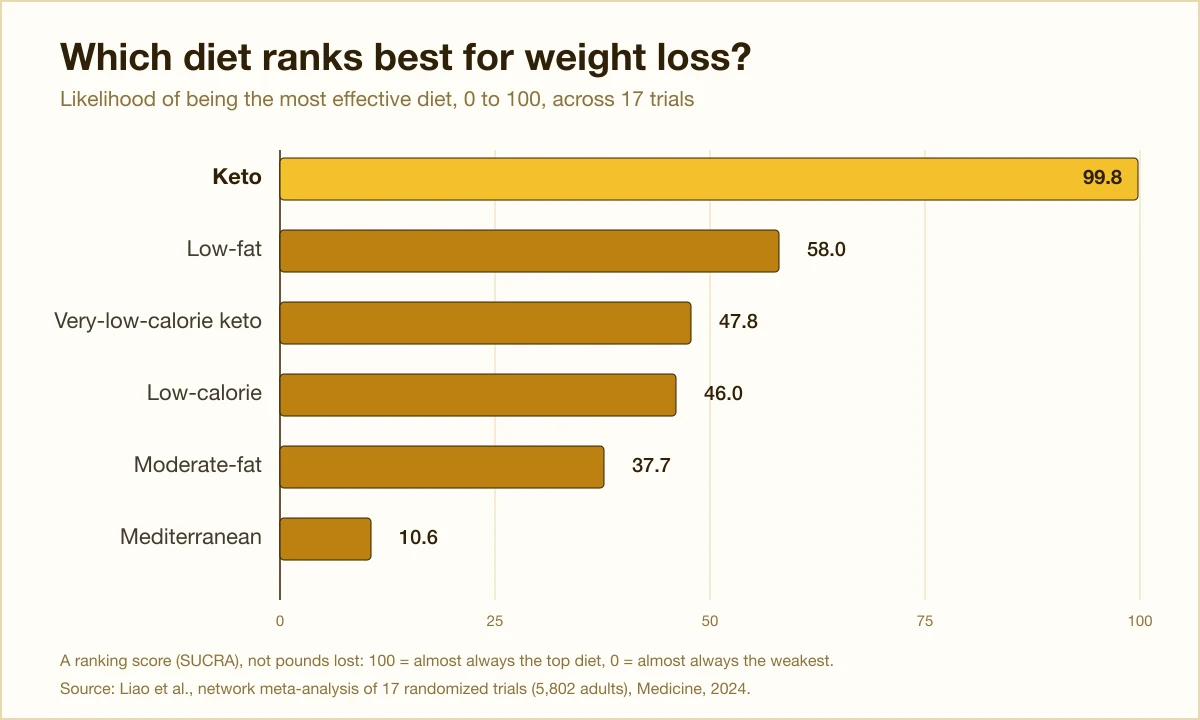
One thing about that score, because the numbers look dramatic. It measures ranking probability from 0 to 100, how likely each diet is to end up the single most effective one, and it says nothing about pounds lost. Keto's 99.8 means it topped almost every comparison. Mediterranean's 10.6 kept it near the bottom for weight loss specifically.
That ranking is not a fluke of one study. When researchers put keto and Mediterranean head to head in the same people, keto still won the scale: 6.9 kg lost versus 5.0 kg over 12 weeks in the Stanford Keto-Med trial (Gardner et al., 2022).
That edge shrinks over time, though. By 12 months most popular diets land in a similar place (BMJ, 2020), and in a year-long trial comparing low-carb to low-fat, adherence predicted success better than the diet itself (DIETFITS, 2018). Read the table, then pick the one you can actually live with.
| Diet | How it works | Realistic first month | Best for | Watch out for |
|---|---|---|---|---|
| Keto | Cut carbs below 20 to 50g, burn fat for fuel | 8 to 15 lb | Fastest start, appetite control | Keto flu, electrolytes, LDL |
| Mediterranean | Whole foods, olive oil, fish, plants | 3 to 6 lb | Easy to eat long term | Slowest for weight loss |
| Intermittent fasting | Eat inside an 8-hour window | 4 to 8 lb | Simple rules, no food is banned | Hunger early, not for everyone |
| High protein + deficit | Moderate deficit, protein first | 4 to 8 lb | Protecting muscle, staying full | Requires tracking protein |
Keto
Keto is the reason "15 pounds in a month" is not always a lie. It starts faster than the other three diets here, and the speed has a real mechanism behind it.
Why keto drops weight so fast
Cut carbs below roughly 20 to 50 grams a day and your body drains its glycogen stores first. Each gram of glycogen holds about three grams of water, which is why the famous keto "whoosh" can take up to 10 pounds off the scale in the first two weeks, much of it water (StatPearls / NCBI). Real fat loss starts after that. In a one-month very-low-calorie keto trial, people lost about 7% of their body weight, and 62% of it was fat mass rather than muscle or water (JCEM, 2025). Ketones also blunt hunger, so the giant deficit that a 15-pound month demands stops feeling like a fight.
What you can eat, and what you can't
Keto is simple to describe and strict to follow: build meals from fat and protein, and keep carbs very low. Here is the full picture by category.
What you can eat:
- Meat and poultry: beef, pork, lamb, chicken, turkey, bacon.
- Fish and seafood: salmon, mackerel, sardines, tuna, shrimp, and other fatty fish.
- Eggs: whole eggs, cooked any way, one of the best keto staples.
- Healthy fats and oils: olive oil, butter, ghee, coconut oil, avocado oil.
- Full-fat dairy: cheese, Greek yogurt, heavy cream, sour cream.
- Low-carb vegetables: spinach, kale, broccoli, cauliflower, zucchini, asparagus, peppers.
- Nuts and seeds: almonds, walnuts, macadamias, pecans, chia, flax, pumpkin seeds.
- Low-sugar fruit: avocado, olives, and small portions of berries.
- Drinks: water, sparkling water, black coffee, unsweetened tea.
What you can't eat:
- Grains and starches: bread, pasta, rice, oats, cereal, crackers.
- Sugar and sweets: candy, soda, juice, desserts, honey, syrup.
- Starchy vegetables: potatoes, sweet potatoes, corn, peas.
- Most fruit: bananas, apples, oranges, grapes, mango.
- Legumes: beans, lentils, chickpeas.
- Hidden sugars: ketchup, barbecue sauce, sweetened dressings, most "low-fat" products.
A normal day looks like eggs fried in butter for breakfast, a big salmon-and-avocado salad for lunch, and steak with roasted broccoli for dinner.
A realistic first month
A heavier person on strict keto can realistically drop 12 to 15 pounds in four to six weeks, since a bigger body sheds more water up front and burns more calories at rest. Start with only 20 pounds to lose and the same effort lands closer to 8 or 10. That gap says nothing about discipline. Lighter bodies store less glycogen, so the scale simply has less water to give up before the real fat loss shows.
Electrolytes and the keto flu
Most beginners skip this part, and it is why so many quit in week one. When insulin drops on keto, your kidneys flush sodium and water fast and take your other electrolytes down with them. The result is the "keto flu": headaches, fatigue, brain fog, and cramps, usually around days two to seven. It comes from a salt and mineral shortage, and extra salt and minerals prevent most of it.
Keto survival rules. Salt your food deliberately and aim for 3 to 5 grams of sodium a day. Supplement potassium and magnesium. Drink plenty of water. Eat enough protein to protect muscle, and do not fear dietary fat, it is your fuel now. Expect the fast water-weight drop, then a slower, steadier pace once the whoosh passes.
Food covers most of it before you touch a supplement. Five electrolytes matter, and here is where each one comes from:
- Sodium: salt your food to taste, sip bone broth, and eat pickles, olives, and cured meats.
- Potassium: avocado, spinach, salmon, mushrooms, and nuts are all keto-friendly and potassium-rich.
- Magnesium: pumpkin seeds, almonds, spinach, avocado, and very dark chocolate (85% or higher).
- Calcium: cheese, leafy greens like kale and bok choy, sardines with the bones, and broccoli.
- Chloride: it rides in with sodium (table salt is sodium chloride), plus olives, seaweed, tomatoes, and celery.
Get blood work before and after
Keto moves your internal numbers along with the scale, so measure them. Get a baseline blood panel before you start and another at week 8 to 12: a full lipid panel including LDL cholesterol, fasting glucose, and HbA1c. Keto lowers blood sugar and triglycerides for most people, but it can raise LDL cholesterol in some, a risk the Keto-Med researchers flagged directly and one to watch with your doctor. Before-and-after bloods turn keto from a guess into a measured experiment on yourself.
Keto and your gut: SIBO and candida
A lot of people carry a quiet gut problem without a name for it: SIBO (small intestinal bacterial overgrowth) or candida, an overgrowth of yeast. Both feed on sugar and fermentable carbs. Cut that fuel and there is simply less to ferment, which is why a low-carb diet like keto so often calms bloating, gas, and brain fog people had lived with for years (narrative review, 2025). Starving an overgrowth is not the same as curing it, though, and a long stretch of very low carb can thin out the good bacteria you want too. Use keto to get the symptoms under control, then rebuild a healthy gut on top of it.
Rebuild the culture with homemade kefir. A daily glass of homemade kefir feeds your gut a far wider range of live cultures than sweetened supermarket yogurt, which helps crowd out the bad organisms and repopulate the good ones. Homemade is the point: the longer ferment builds a much richer culture, and you skip the added sugar that feeds the very thing you are trying to clear.
Who should skip keto
Keto is powerful, and that means it is not for everyone. Skip it, or do it only under medical supervision, if you have type 1 diabetes, are pregnant or breastfeeding, have kidney disease, or a history of disordered eating. If you take insulin or other glucose-lowering medication, keto can drop your blood sugar dangerously fast, so a doctor has to adjust your doses first. When in doubt, ask before you start, not after.
Recipes and resources
You do not need to invent keto meals from scratch. Two doctors on YouTube have done the work already and give away excellent recipes and clear explanations for free. Dr. Sten Ekberg (youtube.com/@drekberg) is calm and evidence-led, great for understanding why keto works. Dr. Eric Berg (youtube.com/@Drberg) is prolific and practical, with hundreds of recipe and troubleshooting videos. Pick a handful of meals you would genuinely eat and rotate them for the first month.
Mediterranean
The Mediterranean diet is built on whole foods, and it is the slowest of the four on the scale. If pure weight loss is your goal, it is not the fastest tool, but it is easy to eat this way without feeling like you are on a diet at all.
What you eat
The plate is built from whole foods, with far less that is truly off-limits than on keto.
- What you can eat: olive oil, fish and seafood, vegetables, fruit, legumes, nuts, whole grains, and yogurt, with red meat and sweets kept occasional.
- What to limit: processed food, refined sugar, sugary drinks, and heavily processed meats.
A glass of red wine with dinner is traditional and optional, not a requirement, and not a reason to start drinking.
What to expect on the scale
This is the slow lane for weight loss, which is exactly why it ranked last in the 2024 analysis. In the PREDIMED-Plus trial, an energy-reduced Mediterranean diet paired with activity produced about 3.8 kg of loss at six months (Diabetes Care, 2019). If your goal is 15 pounds in a month, Mediterranean alone will not get you there.
Intermittent fasting
Intermittent fasting changes when you eat and mostly leaves what you eat alone. For a lot of people that single rule is easier to keep than any food restriction.
How 16:8 works
The most popular version is 16:8: you eat within an 8-hour window, say noon to 8pm, and fast the other 16 hours. There is no calorie counting built in. Compressing meals into fewer hours mostly just removes snacking opportunities, and people end up eating around 300 fewer calories a day without trying.
Since fasting is about timing, no food is banned, but two lists still help:
- In your window: normal, balanced meals, with protein and fiber first so you stay full to the next day.
- During the fast: only water, black coffee, and unsweetened tea, anything with calories or sweetness breaks it.
What to expect
A systematic review of 27 fasting trials found weight loss ranging from 0.8% to 13% of body weight, with no serious adverse events (Welton et al., 2020). In practice, most people lose about 3% of their body weight over 12 weeks of consistent 16:8. That is roughly 4 to 8 pounds in the first month for many, a solid, unglamorous result from a rule you can remember without an app.
Who should skip it
Fasting is not free of downsides. Skip it if you have a history of disordered eating, since a rigid eating window can feed old patterns. If you are diabetic on glucose-lowering medication, fasting can cause dangerous lows, so clear it with your doctor first. And if you train hard in the morning, fasting straight through your workout may leave you flat.
High protein and a deficit
Every diet above works because you end up eating less than you burn, whether the tool is carbs, meal timing, or portion size. High protein is the engine that makes all of them run better.
The math every diet obeys
Weight loss comes down to a calorie deficit. A sustainable target is 500 to 750 calories below what you burn, which produces roughly 1 to 1.5 pounds of loss a week. Bigger deficits work faster but get harder to hold and start eating into muscle. That band is the sweet spot for most people, on any of the diets here.
Track calories
Log your meals to stay aware
Why it may help: The deficit only works if it is real, and most people underestimate what they eat by a wide margin. Logging meals shows you the gap you cannot feel, so you adjust the one or two places that matter instead of guessing.
No soda
Skip soda today to cut empty calories
Why it may help: Liquid sugar slips past fullness in a way food does not, so a daily soda can quietly cancel part of the deficit. Cutting it removes those calories without shrinking any meal, which makes the week easier rather than harder.
Why protein protects your muscle
When you lose weight, some of what you lose is muscle, unless you protect it. In a 12-week study at a 750-calorie deficit, the high-protein group lost far less lean mass than the normal-protein group, 1.5 kg versus 2.8 kg, with the same weight loss overall (Layman et al., American Journal of Clinical Nutrition). Protein also keeps you fuller, so the deficit is easier to sit with.
How to set yours up
Aim for about 1.6 to 2.2 grams of protein per kilogram of body weight per day. Put protein on the plate first, then build the rest of the meal around it. Do this on top of keto, Mediterranean, or fasting, and you keep more muscle while the fat comes off.
Load up on protein from across these groups:
- Meat and poultry: chicken breast, turkey, lean beef, pork.
- Fish and seafood: salmon, tuna, cod, shrimp.
- Eggs and dairy: eggs, Greek yogurt, cottage cheese, milk.
- Plant proteins: lentils, beans, chickpeas, tofu, tempeh, edamame.
- Convenience: whey or plant protein powder for days you fall short.
Exercise: train for health, don't punish yourself
Your diet creates the deficit. Exercise decides what kind of weight you lose, and it holds most of the long-term health payoff. The dose is what people get wrong, in both directions.
Lift and move, in that order of priority
Resistance training is the single best thing you can do while losing weight, because it tells your body to keep the muscle instead of burning it for fuel. Add some cardio for your heart, your mood, and a few extra calories out. You do not need a complicated program: two or three strength sessions a week plus daily walking covers most of it.
Don't overdo it in a deep deficit
Eating far below what you burn slows your recovery, so hammering yourself with long, brutal workouts backfires into extra fatigue, lost muscle, injuries, and often more hunger than you can control. In trials during calorie restriction, moderate resistance training preserved lean mass better than going all-out (Frontiers in Nutrition, 2025). Train hard enough to signal the muscle to stay, then let yourself recover. You cannot out-exercise your fork from inside a 1,750-calorie hole anyway.
What about Ozempic?
We would be dishonest to write a 2026 weight-loss guide and pretend GLP-1 drugs do not exist. Medications like semaglutide are real, and they work: in the STEP 1 trial, participants lost an average of 14.9% of their body weight over 68 weeks (NEJM, 2021). That is more than any diet on this page.
They are also prescription medications with side effects, taken under medical supervision, not a diet you choose off a blog. They are expensive, and the appetite suppression fades when you stop, so the weight tends to return unless you built the habits to hold it. Talk to your doctor if you think a GLP-1 is right for you. Drug or no drug, the habits you keep decide where your weight lands a year from now.